
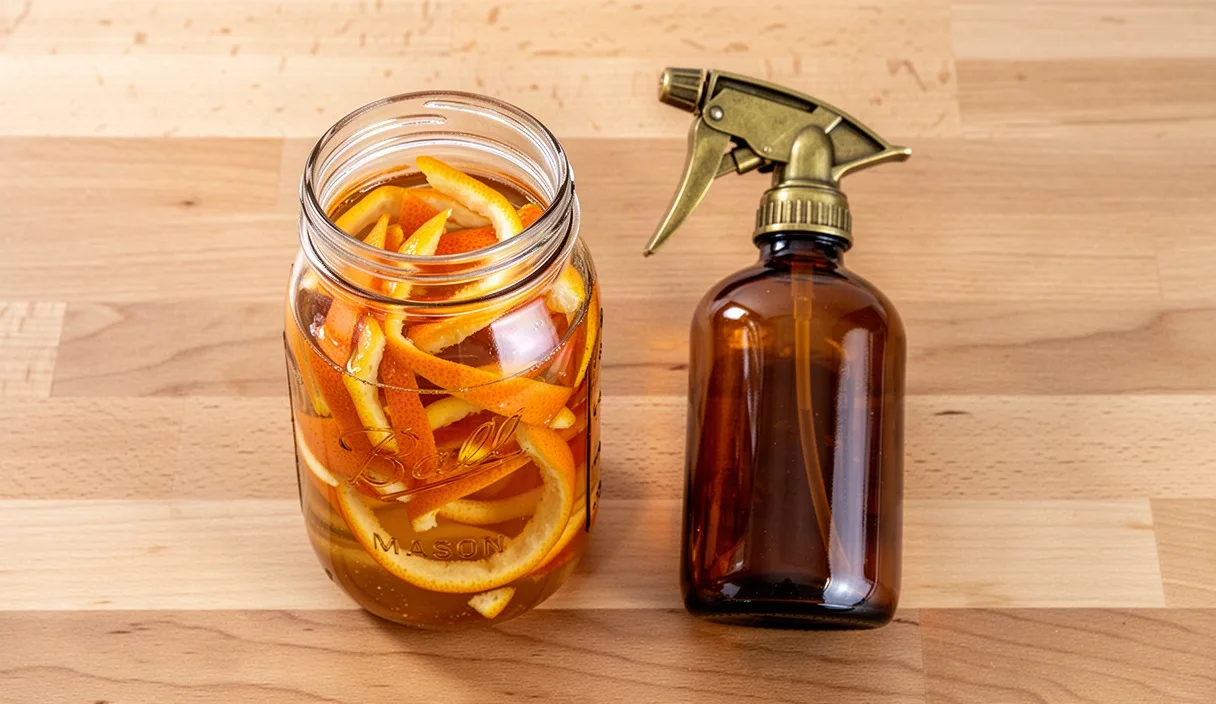

Every week, kitchen trash cans collect piles of orange rinds, lemon wedges, and grapefruit hulls. Instead of tossing those aromatic rinds into the compost bin immediately, you can run them through a simple cold extraction process using standard pantry vinegar. Citrus skins hold rich pockets of d-limonene, a natural hydrocarbon solvent found in the oil glands of the flavedo, which is the colored exterior layer of the fruit. When paired with acetic acid, these citrus oils help dissolve grease, lift soap film, and reduce the harsh, pungent bite of plain white vinegar.
Making citrus cleaning vinegar requires little hands-on effort, but it does demand attention to basic preservation rules. Vinegar is a strong preservative, yet rogue peel fragments floating above the waterline will invite mold spores before the batch finishes steeping. By following precise ratios, selecting the right acid strength, and filtering out clouding pulp particles, you create a shelf-stable surface cleaner that handles daily household grime without synthetic perfumes.
Choosing Peels and White Distilled Vinegar
The foundation of this cleaner rests on two ingredients: fresh citrus rinds and plain white distilled vinegar. Standard grocery store white vinegar contains 5 percent acetic acid, which translates to a pH of around 2.5. This specific concentration provides enough acidity to dissolve alkaline mineral deposits, such as hard water rings, while acting as an antimicrobial wash. Avoid using white vinegar labeled as "cleaning vinegar" at 6 percent or higher for the initial steeping stage unless you plan to adjust your final water dilution later, as higher acid strengths can dry out skin and create overpoweringly sharp fumes in closed rooms. Never use apple cider vinegar, wine vinegar, or balsamic vinegar; these contain residual sugars, tannins, and color compounds that leave sticky residues or stain light surfaces.
You can use rinds from almost any citrus variety, though different fruits contribute varying amounts of cleaning oil and pigment. Lemon peels provide high concentrations of citric compounds with a crisp fragrance. Sweet oranges and clementines carry abundant d-limonene oils that cut kitchen grease effectively, though their orange pigments can faintly tint clear plastics if left undiluted. Grapefruit yields a subtle, dry scent and contains broad sheets of peel that are easy to pack, while limes offer an earthy, bright aroma but smaller surface areas.
| Citrus Variety | Oil Concentration | Aroma Character | Best Cleaning Application |
|---|---|---|---|
| Lemon | Medium-High | Sharp, classic citrus | Bathroom fixtures, sinks, chrome |
| Orange | High | Warm, sweet, rich | Greasy stovetops, range hoods |
| Grapefruit | Medium | Bitter, mild, clean | Trash bins, plastic food containers |
| Lime | Low-Medium | Fresh, herbal | Tile backsplashes, microwave interiors |
Before collecting your scraps, scrub the whole fruit under warm running water to remove wax coatings or agricultural residues. When eating the fruit or squeezing it for juice, separate the soft, dripping wet interior flesh from the tough rind. You do not need to scrape off every speck of white pith, but you must discard soggy pulp sacs and fruit seeds. Wet pulp contains excess moisture and sugars that cloud the infusion and increase the likelihood of spoilage. If you consume citrus slowly, keep an airtight container in your freezer. Drop freshly spent peels into the container over several weeks until you have collected roughly 300 to 400 grams of rinds, which is enough to fill a one-quart mason jar.
Packing the Steeping Jar to Stop Mold
Mold prevention is the primary technical challenge when infusing organic scraps in vinegar. Even though a 5 percent acetic acid bath inhibits most pathogenic bacteria, fungal spores can germinate on any piece of organic matter that rests exposed to oxygen above the surface of the liquid. Once fuzzy white, green, or black mold forms across a floating peel tip, the entire batch must be thrown into the compost bin.
Choose a wide-mouth glass jar with a capacity of one quart (roughly 950 milliliters) or a half-gallon (roughly 1.9 liters). Wash the glass container with hot, soapy water, rinse it thoroughly, and allow it to dry completely. Pack the thawed or fresh citrus peels into the container, pressing down firmly with a wooden spoon or clean fingers to eliminate large air pockets between the layers. Pack the peels until the jar is roughly two-thirds to three-quarters full. Packing too tightly prevents the vinegar from circulating around the edges, while packing too loosely means you use more liquid than necessary, producing a weak, faint citrus concentrate.
Pour your white distilled vinegar over the packed citrus, ensuring the liquid flows into every crevice. Add enough vinegar to cover the rinds completely, maintaining a liquid line at least 2 to 3 centimeters above the highest piece of peel. To guarantee that no errant peels bob to the surface, place a clean glass fermentation weight, a ceramic ramekin, or a small food-safe glass jar filled with water directly on top of the rinds to hold them down.
Vinegar quickly corrodes traditional metal canning bands and lids, reacting with the tinplate to form rust and unpleasant metallic salts. Seal your jar with a solid plastic lid, a silicone sealing cap, or place a double layer of parchment paper or plastic wrap over the glass rim before screwing on a standard two-piece metal ring. Ensure the seal is snug to reduce evaporation over the multi-week infusion window.
Waiting Two Weeks for Cold Acid Extraction
A slow, cold extraction at room temperature preserves the volatile terpenes within the citrus oils far better than heated methods. Some recipes recommend simmering peels in vinegar on the stovetop to speed up the infusion process, but applying heat degrades the bright aroma, aerosolizes choking acetic acid vapor across your kitchen, and causes the citrus oils to break down prematurely. Cold extraction allows the acetic acid to break open the oil glands gently over time.
Place your sealed jar in a cool, dark cabinet or pantry shelf where the ambient temperature stays between 16 and 22 degrees Celsius (61 to 72 degrees Fahrenheit). Avoid windowsills or areas near the stove, as exposure to direct sunlight and erratic heat cycles will oxidize the essential oils, turning the bright infusion brown and dulling its scent.
Allow the mixture to steep for a minimum of 14 days, though 21 days provides a slightly deeper solvent profile. During the first week, pick up the jar every two or three days and swirl it gently for five seconds to encourage liquid movement without splashing peels above the safe liquid level. As the days pass, the clear vinegar will shift into an opaque, vibrant golden-yellow or deep orange tone, depending on the citrus varieties you selected. After three weeks, the extraction plateaus; leaving peels submerged beyond 30 days yields diminishing returns and can begin to extract bitter, sulfurous notes from decaying pith.
Double-Straining Sediment Through Fine Cloth
Once the steeping period finishes, removing all solid fragments becomes your chief priority. If tiny particulate matter or pith shreds remain in your final spray bottle, they will gather at the base of the intake tube, clog the tiny aperture of the trigger sprayer, and leave streaky smears across glass surfaces. A casual pour through a regular kitchen colander is not sufficient.
Set up a two-stage straining station on your counter. For the initial separation, set a wide stainless steel mesh sieve over a large glass mixing bowl. Uncap the jar, remove the fermentation weight, and pour the contents through the sieve. Let the spent rinds sit in the wire mesh for two minutes so the acid drains freely into the bowl. Press down gently with the back of a ladle to extract the trapped liquid, but avoid mashing the peels aggressively, which forces unwanted mush and pectin through the wire.
The spent peels have given up their valuable aromatic oils and can now be dropped directly into your compost pile or green waste bin. For the second clarification pass, line the wire mesh sieve with a clean, unbleached flour sack towel, a piece of tightly woven butter muslin, or a paper basket coffee filter. Pour the rough-strained vinegar through this cloth barrier into a clean glass storage jug. This fine filtration catches micro-fibers, floating sediment, and suspended waxes.
Store your clarified concentrate in an amber or clear glass bottle sealed with a plastic pour spout or poly-cone cap. Label the container with the date of extraction and the peel varieties used. Stored in a dark cupboard out of direct heat, this concentrated infusion retains its full cleaning potency for up to one year.
Diluting Concentrates for Countertop Cleaning
Citrus scrap cleaning vinegar is a concentrated formula, not a ready-to-use surface spray. Using the undiluted infusion directly out of the steeping jar wastes your solvent, creates an unnecessarily strong vinegar scent, and leaves a trace oily film on non-porous materials. Diluting the acid base with clean water produces an effective, balanced cleaning spray that cuts grime while evaporating cleanly.
Always mix your concentrate with distilled, demineralized, or boiled-and-cooled tap water. Plain tap water contains dissolved minerals such as calcium, iron, and magnesium, which can react with the organic acids and cause cloudiness or musty smells after several weeks inside a spray bottle. Measure your liquids according to the cleaning job at hand using standard dilution ratios.
- Standard Multi-Surface Spray (1:1 Ratio): Combine one part citrus vinegar concentrate with one part distilled water. This is the workhorse blend for everyday kitchen grease, stovetop splatters, sink basins, and bathroom tiles.
- Light Glass and Mirror Cleaner (1:2 Ratio): Combine one part citrus vinegar concentrate with two parts distilled water. Lowering the acid and oil concentration prevents hazing on high-gloss mirrors and exterior window glass.
- Heavy-Duty Mineral and Soap Scum Cleaner (Undiluted or 2:1 Ratio): Combine two parts citrus vinegar concentrate with one part water, or apply undiluted concentrate with a sponge directly to stubborn toilet bowl water lines, chrome shower valves, and tile grout lines.
Pour your diluted solution into an opaque plastic spray bottle (made from high-density polyethylene, labeled HDPE #2) or a glass spray bottle fitted with an adjustable trigger nozzle. Give the bottle a quick swirl before each cleaning session to ensure any settled essential oils are evenly dispersed through the water base. Once diluted with water, aim to use the spray bottle within two to three months for optimal freshness.
Surfaces to Clean and Stone Counters to Avoid
Citrus vinegar is an effective acidic cleaner, but acid reacts chemically with certain household materials. Understanding which surfaces tolerate low-pH treatments and which suffer permanent damage is critical before you begin spraying down your home.
Citrus vinegar excels on non-porous, acid-resistant materials throughout the kitchen and bathroom. It cleans stainless steel appliances, glazed ceramic backsplash tiles, porcelain bathtubs, enameled sinks, chrome faucets, laminated laminate counters, and the interior walls of microwaves and refrigerators. The acid breaks down hard water crusts and alkaline body oils, while the d-limonene cuts through cooking fats and sticky label adhesive residues.
Never use citrus vinegar cleaners on natural stone. This includes marble, granite, limestone, travertine, soapstone, and slate. These stones contain calcium carbonate or delicate mineral binders that react instantly with acetic and citric acids. Spraying an acidic mixture on polished marble or granite causes chemical etching, leaving rough, cloudy, dull spots that cannot be washed away and require professional mechanical repolishing to repair. If your kitchen features composite quartz surfaces, check the manufacturer maintenance manual before applying vinegar; some resin binders can discolor when exposed to acid over extended contact periods.
Avoid using vinegar cleaners on unfinished wood, antique furniture, or solid hardwood floors protected by traditional paste wax or basic polyurethane. Repeated acid exposure softens waxes, dissolves finishes, and can turn bare wood gray. You should also avoid using vinegar on electronic displays, flat-screen televisions, and laptop monitors, as the acid strips the delicate anti-glare and oleophobic coatings applied by the factory. When working with unfamiliar surfaces, always apply a drop of diluted cleaner to an inconspicuous corner, wait five minutes, and wipe it dry to check for changes in sheen or color.
Common Mistakes
A few frequent oversights can derail an otherwise solid batch of citrus vinegar cleaner. Watch out for these four missteps during preparation and storage:
- Leaving Peels Exposed to Air: Failing to use a fermentation weight or ramekin allows peels to float. Mold requires oxygen to thrive, and exposed rind tips become a breeding ground within days.
- Using Standard Canning Lids: Plain metal jar lids corrode quickly when exposed to vinegar fumes. Always use plastic lids, silicone covers, or a protective sheet of parchment paper beneath metal bands.
- Skipping the Fine Strain: Straining through a coarse wire colander leaves microscopic pulp particles behind. These fibers decompose in the spray bottle and frequently plug the tiny valves inside spray triggers.
- Using Soft Fruit Residue: Tossing whole, squishy fruit halves with clinging pulp into the steeping jar adds excess water and fruit sugars. Sugars leave counters tacky and invite bacterial growth.
Next Steps for Your Kitchen Scraps
Start by setting aside a clean, wide-mouth quart jar and a freezer storage bag this week. As your household uses lemons, oranges, or grapefruits for morning water, dressings, or snacks, discard the wet pulp sacs and stash the firm rinds in the freezer until the bag is full.
Once you have enough scraps to fill your jar two-thirds full, thaw the peels on a kitchen towel for twenty minutes to release excess surface frost, pack them down, and pour in your 5 percent white distilled vinegar. Mark a calendar reminder for 14 days out, keep the jar tucked into a dark cabinet, and gather a dedicated glass spray bottle in the meantime. By letting simple kitchen scraps steep undisturbed, you will turn everyday compost materials into a dependable, inexpensive degreasing cleaner for your home.